Nursing Path

CARING is the essence of NURSING. -Jean Watson

Nursing Path

Knowing is not enough, we must APPLY. Willing is not enough, we must DO. -Bruce Lee

Nursing Path

Treat the patient as a whole, not just the hole in the patient.

Nursing Path

Success is not final. Failure is not fatal. It is the courage to continue that counts. -Winston Churchill

Nursing Path

A problem is a chance for you to do your best. -Duke Ellington

Showing posts with label Pharmacology. Show all posts

Epinephrine

 Drug Name


Generic Name : epinephrine (adrenaline), epinephrine bitartrate, epinephrine borate, epinephrine hydrochloride

Brand Name:

  • Aerosol:  Primatene Mist
  • Ophthalmic solution: Epinal
  • Injection, OTC nasal solution: Adrenalin Chloride
  • Insect-sting emergencies: EpiPen Auto-Injector (delivers 0.3 mg IM adult dose), EpiPen Jr. Auto-Injector (delivers 0.15 mg IM for children)
  • OTC solutions for nebulization: AsthmaNefrin, microNefrin, Nephron, S2

Classification: SympathomimeticAlpha-adrenergic agonistBeta1- and beta2-adrenergic agonist, Cardiac stimulant, Vasopressor, Bronchodilator, Antasthmatic, Nasal decongestant, Mydriatic

Pregnancy Category C

Dosage & Route
ADULTS

Epinephrine injection

  • Cardiac arrest: 0.5–1 mg (5–10 mL of 1:10,000 solution) IV or by intracardiac injection into left ventricular chamber; during resuscitation, 0.5 mg q 5 min.

Intraspinal

0.2–0.4 mL of a 1:1,000 solution added to anesthetic spinal fluid mixture.

  • Other use with local anesthetic: Concentrations of 1:100,000–1:20,000 are usually used.

1:1,000 solution

  • Respiratory distress: 0.3–0.5 mL of 1:1,000 solution (0.3–0.5 mg), subcutaneously or IM, q 20 min for 4 hr.

1:200 suspension (for subcutaneous administration only)

  • Respiratory distress: 0.1–0.3 mL (0.5–1.5 mg) subcutaneously.

Inhalation (aerosol)

  • Begin treatment at first symptoms of bronchospasm. Individualize dosage. Wait 1–5 min between inhalations to avoid overdose.

Inhalation (nebulization)

  • Place 8–15 drops into the nebulizer reservoir. Place nebulizer nozzle into partially opened mouth. Patient inhales deeply while bulb is squeezed one to three times. If no relief in 5 min, give 2–3 additional inhalations. Use four to six times per day usually maintains comfort.

Topical nasal solution

  • Apply locally as drops or spray or with a sterile swab, as required.

Ophthalmic solution

  • Vasoconstriction, mydriasis: Instill 1–2 drops into the eye or eyes; repeat once if necessary.
PEDIATRIC PATIENTS

Epinephrine injection

  • 1:1,000 solution, children and infants except premature infants and full-term newborns: 0.01 mg/kg or 0.3 mL/m2 (0.01 mg/kg or 0.3 mg/m2) subcutaneously q 20 min (or more often if needed) for 4 hr. Do not exceed 0.5 mL (0.5 mg) in a single dose.
  • 1:200 suspension, infants and children (1 mo–1 yr): 0.005 mL/kg (0.025 mg/kg) subcutaneously.
  • Children < 30 kg: Maximum single dose is 0.15 mL (0.75 mg). Administer subsequent doses only when necessary and not more often than q 6 hr.

Topical nasal solution

  • > 6 yr: Apply locally as drops or spray or with a sterile swab, as required.

Ophthalmic solutions

  • Safety and efficacy for use in children not established.
GERIATRIC PATIENTS OR PATIENTS WITH RENAL FAILURE
  • Use with caution; patients > 60 yr are more likely to develop adverse effects.
Therapeutic actions
  • Epinephrine, an active principle of the adrenal medulla, is a direct-acting sympathomimetic. It stimulates α- and β-adrenergic receptors resulting in relaxation of smooth muscle of the bronchial tree, cardiac stimulation and dilation of skeletal muscle vasculature. It is frequently added to local anaesthetics to retard diffusion and limit absorption, to prolong the duration of effect and to lessen the danger of toxicity.
Indications
  • IV: In ventricular standstill after all other measures have failed to restore circulation, given by trained personnel by intracardiac puncture and intramyocardial injection; treatment and prophylaxis of cardiac arrest and attacks of transitory AV heart block with syncopal seizures (Stokes-Adams syndrome); syncope due to carotid sinus syndrome; acute hypersensitivity (anaphylactoid) reactions, serum sickness, urticaria, angioneurotic edema; in acute asthmatic attacks to relieve bronchospasm not controlled by inhalation or subcutaneous injection; relaxation of uterine musculature; additive to local anesthetic solutions for injection to prolong their duration of action and limit systemic absorption
  • Injection: Relief from respiratory distress of bronchial asthma, chronic bronchitis, emphysema, other COPDs
  • Aerosols and solutions for nebulization: Temporary relief from acute attacks of bronchial asthma, COPD
  • Topical nasal solution: Temporary relief from nasal and nasopharyngeal mucosal congestion due to a cold, sinusitis, hay fever, or other upper respiratory allergies; adjunctive therapy in middle ear infections by decreasing congestion around eustachian ostia
  • 0.1% ophthalmic solution: Conjunctivitis, during eye surgery to control bleeding, to produce mydriasis
Adverse effects
  • CNS effects; GI disturbances; epigastric pain; CV disorders; difficulty in micturition with urinary retention; dyspnoea; hyperglycaemia; sweating; hypersalivation; weakness, tremors; coldness of extremities; hypokalaemia. Gangrene, tissue necrosis and sloughing (extravasation) when used in addition to local anaesthetics. Eye drops: Severe smarting, blurred vision, photophobia; naso-lachrymal ducts obstruction. Oedema, hyperaemia and inflammation of the eyes with repeated administration.
Contraindications
  • Preexisting hypertension; occlusive vascular disease; angle-closure glaucoma (eye drops); hypersensitivity; cardiac arrhythmias or tachycardia. When used in addition to local anaesthetics: Procedures involving digits, ears, nose, penis or scrotum.
Nursing considerations
Assessment
  • History: Allergy or hypersensitivity to epinephrine or components of drug preparation; narrow-angle glaucoma; shock other than anaphylactic shock; hypovolemia; general anesthesia with halogenated hydrocarbons or cyclopropane; organic brain damage, cerebral arteriosclerosis; cardiac dilation and coronary insufficiency; tachyarrhythmias; ischemic heart disease; hypertension; renal impairment; COPD; diabetes mellitus; hyperthyroidism; prostatic hypertrophy; history of seizure disorders; psychoneuroses; labor and delivery; lactation; contact lens use, aphakic patients (ophthalmic preparations)
  • Physical: Weight; skin color, T, turgor; orientation, reflexes, IOP; P, BP; R, adventitious sounds; prostate palpation, normal urine output; urinalysis, renal function tests, blood and urine glucose, serum electrolytes, thyroid function tests, ECG
Interventions
  • WARNING: Use extreme caution when calculating and preparing doses; epinephrine is a very potent drug; small errors in dosage can cause serious adverse effects. Double-check pediatric dosage.
  • Use minimal doses for minimal periods of time; “epinephrine-fastness” (a form of drug tolerance) can occur with prolonged use.
  • Protect drug solutions from light, extreme heat, and freezing; do not use pink or brown solutions. Drug solutions should be clear and colorless (does not apply to suspension for injection).
  • Shake the suspension for injection well before withdrawing the dose.
  • Rotate subcutaneous injection sites to prevent necrosis; monitor injection sites frequently.
  • WARNING: Keep a rapidly acting alpha-adrenergic blocker (phentolamine) or a vasodilator (a nitrate) readily available in case of excessive hypertensive reaction.
  • WARNING: Have an alpha-adrenergic blocker or facilities for intermittent positive pressure breathing readily available in case pulmonary edema occurs.
  • WARNING: Keep a beta-adrenergic blocker (propranolol; a cardioselective beta-adrenergic blocker, such as atenolol, should be used in patients with respiratory distress) readily available in case cardiac arrhythmias occur.
  • Do not exceed recommended dosage of inhalation products; administer pressurized inhalation drug forms during second half of inspiration, because the airways are open wider and the aerosol distribution is more extensive. If a second inhalation is needed, administer at peak effect of previous dose, 3–5 min.
  • Use topical nasal solutions only for acute states; do not use for longer than 3–5 days, and do not exceed recommended dosage. Rebound nasal congestion can occur after vasoconstriction subsides.
Teaching points
  • Do not exceed recommended dosage; adverse effects or loss of effectiveness may result. Read the instructions that come with respiratory inhalant products, and consult your health care provider or pharmacist if you have any questions.
  • To give eye drops: Lie down or tilt head backward, and look up. Hold dropper above eye; drop medicine inside lower lid while looking up. Do not touch dropper to eye, fingers, or any surface. Release lower lid; keep eye open, and do not blink for at least 30 seconds. Apply gentle pressure with fingers to inside corner of the eye for about 1 minute; wait at least 5 minutes before using other eye drops.
  • You may experience these side effects: Dizziness, drowsiness, fatigue, apprehension (use caution if driving or performing tasks that require alertness); anxiety, emotional changes; nausea, vomiting, change in taste (eat frequent small meals); fast heart rate. Nasal solution may cause burning or stinging when first used (transient). Ophthalmic solution may cause slight stinging when first used (transient); headache or brow ache (only during the first few days).
  • Report chest pain, dizziness, insomnia, weakness, tremor or irregular heart beat (respiratory inhalant, nasal solution), difficulty breathing, productive cough, failure to respond to usual dosage (respiratory inhalant), decrease in visual acuity (ophthalmic).

NCLEX Quiz Series              NSAID Quiz               Vitamin A Quiz

Previous Nursing Exam Question Paper     Red blood cell (RBC) Quiz

Anatomy and Physiology Quiz Series  Immunoglobin & Immunity Quiz

Anatomy and Physiology Quiz Series   BCG or MMR Quiz

Community Health Nursing Quiz Series  Level of Prevention

Child Health Nursing Quiz Series           Female Reproductive System

Medical – Surgical Nursing Quiz Series

Maternity Nursing Quiz Series   Polio Vaccine Quiz

Mental Health Nursing Quiz Series  DT Vaccine

Fundamental Health Nursing Quiz Series   Mental Health Quiz

Nutrition and Biochemistry Quiz Series

Psychology Quiz Series                 Components of blood Quiz

Microbiology Quiz Series   Vitamin Quiz

Pharmacology Quiz Series    DPT Vaccine  

Nursing Education Quiz Series

Nursing Research & Statistics Quiz Series

Nursing Management Quiz Series


Enalapril Maleate

 Drug Name 


Generic Nameenalapril maleate

Brand Name: Vasotec , enalaprilat , Vasotec I.V.

Classification: AntihypertensiveACE inhibitor

Pregnancy Category D

Dosage & Route

Available forms : Tablets—2.5, 5, 10, 20 mg; injection—1.25 mg/mL

ADULTS

Oral

Hypertension:

  • Patients not taking diuretics: Initial dose is 5 mg/day PO. Adjust dosage based on patient response. Usual range is 10–40 mg/day as a single dose or in two divided doses.
  • Patients taking diuretics: Discontinue diuretic for 2–3 days if possible. If it is not possible to discontinue diuretic, give initial dose of 2.5 mg, and monitor for excessive hypotension.
  • Converting to oral therapy from IV therapy: 5 mg daily with subsequent doses based on patient response.

CHF: 2.5 mg PO daily or bid in conjunction with diuretics and digitalis. Maintenance dose is 5–20 mg/day given in two divided doses. Maximum daily dose is 40 mg.

Asymptomatic LVD: 2.5 mg PO bid; target maintenance dose 20 mg/day in two divided doses.

Parenteral

  • Give IV only. 1.25 mg q 6 hr given IV over 5 min. A response is usually seen within 15 min, but peak effects may not occur for 4 hr.

Hypertension:
Converting to IV therapy from oral therapy: 1.25 mg q 6 hr; monitor patient response.

Patients taking diuretics: 0.625 mg IV over 5 min. If adequate response is not seen after 1 hr, repeat the 0.625-mg dose. Give additional doses of 1.25 mg q 6 hr.

PEDIATRIC PATIENTS 1 MO–16 YR

Oral

Hypertension: Initial dose is 0.08 mg/kg PO once daily; maximum dose is 5 mg.

GERIATRIC PATIENTS AND PATIENTS WITH RENAL IMPAIRMENT

Oral

  • Excretion is reduced in renal failure; use smaller initial dose, and adjust upward to a maximum of 40 mg/day PO. For patients on dialysis, use 2.5 mg on dialysis days.
Therapeutic actions
  • Enalapril is de-esterified into the active enalaprilat resulting in potent inhibition of ACE thus leading to reduced levels of angiotensin II and aldosterone. Clinically, BP is reduced, salt and water retention is corrected. Ventricular hypertrophy is reversed. Renal blood flow is increased but in patients with renal impairment there may be oliguria or acute renal failure.
Indications
  • Treatment of hypertension alone or in combination with other antihypertensives, especially thiazide-type diuretics
  • Treatment of acute and chronic CHF
  • Treatment of asymptomatic left ventricular dysfunction (LVD)
  • Unlabeled use: Diabetic nephropathy
Adverse effects
  • Initial hypotension may be severe and prolonged. Dizziness, headache, fatigue, persistent dry cough, abnormal taste, lassitude, rash, neutropenia, renal impairment or failure.
  • Potentially Fatal: Angioedema.
Contraindications
  • Hypersensitivity. History of angioedema due to previous treatment with ACE inhibitors; bilateral renal artery stenosis. Pregnancy.
Nursing considerations
Assessment
  • History: Allergy to enalapril, impaired renal function, salt or volume depletion, lactation, pregnancy
  • Physical: Skin color, lesions, turgor; T; orientation, reflexes, affect, peripheral sensation; P, BP, peripheral perfusion; mucous membranes, bowel sounds, liver evaluation; urinalysis, LFTs, renal function tests, CBC, and differential
Interventions
  • WARNING: Alert surgeon, and mark patient’s chart with notice that enalapril is being taken; the angiotensin II formation subsequent to compensatory renin release during surgery will be blocked; hypotension may be reversed with volume expansion.
  • Be aware that use of this drug in second and third trimesters can cause serious injury or death to the fetus; advise contraceptive use.
  • Monitor patients on diuretic therapy for excessive hypotension after the first few doses of enalapril.
  • Monitor patient closely in any situation that may lead to a drop in BP secondary to reduced fluid volume (excessive perspiration and dehydration, vomiting, diarrhea) because excessive hypotension may occur.
  • Arrange for reduced dosage in patients with impaired renal function.
  • WARNING: Monitor patient carefully because peak effect may not be seen for 4 hr. Do not administer second dose until BP has been checked.
Teaching points
  • Do not stop taking the medication without consulting your health care provider.
  • Be careful in any situation that may lead to a drop in blood pressure (diarrhea, sweating, vomiting, dehydration).
  • Avoid over-the-counter medications, especially cough, cold, and allergy medications that may interact with this drug.
  • You may experience these side effects: GI upset, loss of appetite, change in taste perception (will pass with time); mouth sores (frequent mouth care may help); rash; fast heart rate; dizziness, light-headedness (usually passes in a few days; change position slowly, limit activities to those not requiring alertness and precision).
  • Use of contraception is advised while taking the drug.
  • Report mouth sores; sore throat, fever, chills; swelling of the hands, feet; irregular heartbeat, chest pains; swelling of the face, eyes, lips, tongue, difficulty breathing.

NCLEX Quiz Series              NSAID Quiz               Vitamin A Quiz

Previous Nursing Exam Question Paper     Red blood cell (RBC) Quiz

Anatomy and Physiology Quiz Series  Immunoglobin & Immunity Quiz

Anatomy and Physiology Quiz Series   BCG or MMR Quiz

Community Health Nursing Quiz Series

Child Health Nursing Quiz Series           Female Reproductive System

Medical – Surgical Nursing Quiz Series

Maternity Nursing Quiz Series   Polio Vaccine Quiz

Mental Health Nursing Quiz Series  DT Vaccine

Fundamental Health Nursing Quiz Series   Mental Health Quiz

Nutrition and Biochemistry Quiz Series

Psychology Quiz Series                 Components of blood Quiz

Microbiology Quiz Series   Vitamin Quiz

Pharmacology Quiz Series    DPT Vaccine  

Nursing Education Quiz Series

Nursing Research & Statistics Quiz Series

Nursing Management Quiz Series


Disulfiram

 Drug Name   


Generic Name : disulfiram

Brand Name: Antabuse

ClassificationAntialcoholic drug, Enzyme inhibitor

Pregnancy Category C

Dosage & Route               Bumetanide

Available forms : Tablets—250 mg.

BLACK BOX WARNING: Never administer to an intoxicated patient or without patient’s knowledge. Do not administer until patient has abstained from alcohol for at least 12 hr.

ADULTS

  • Initial dosage: Administer maximum of 500 mg/day PO in a single dose for 1–2 wk. If a sedative effect occurs, administer at bedtime or decrease dosage.
  • Maintenance regimen: 125–500 mg/day PO. Do not exceed 500 mg/day. Continue use until patient is fully recovered socially and a basis for permanent self-control is established.
  • Trial with alcohol (do not administer to anyone > 50 yr): After 1–2 wk of therapy with 500 mg/day PO, a drink of 15 mL of 100 proof whiskey or its equivalent is taken slowly. Dose may be repeated once, if patient is hospitalized and supportive facilities are available.
Therapeutic actions
  • Disulfiram inhibits aldehyde dehydrogenase, the oxidative enzyme of acetaldehyde, a metabolite of alcohol. The latter is accumulated in the blood, thus producing unpleasant symptoms of disulfiram-alcohol reaction when a patient has taken small amounts of alcohol.
Indications
  •  Aids in the management of selected chronic alcoholics who want to remain in a state of enforced sobriety
Adverse effects
  • Drowsiness, fatigue, lassitude, psychotic reactions, peripheral and optic neuropathies, hepatotoxicity, garlic-like or metallic after-taste, GI upset, body odour, bad breath, headache, impotence.
  • Potentially Fatal: Respiratory depression, CV collapse, arrhythmias, myocardial infarction, acute CHF, convulsions, sudden death.
Contraindications
  • Hypersensitivity, CVS diseases; peripheral neuropathy, psychosis. Not to be used in patients with alcohol intoxication.
Nursing considerations
Assessment
  • History: Allergy to disulfiram or other thiuram derivatives; severe myocardial disease or coronary occlusion; psychoses; current or recent treatment with metronidazole, paraldehyde, alcohol, alcohol-containing preparations (eg, cough syrups, tonics); diabetes mellitus, hypothyroidism, epilepsy, cerebral damage, chronic and acute nephritis, hepatic cirrhosis or impairment; pregnancy
  • Physical: Skin color, lesions; thyroid palpation; orientation, affect, reflexes; P, auscultation, BP; R, adventitious sounds; liver evaluation; LFTs, renal function tests, CBC, SMA-12
Interventions
  • Do not administer until patient has abstained from alcohol for at least 12 hr.
  • Administer orally; tablets may be crushed and mixed with liquid beverages.
  • Monitor liver function tests before, in 10–14 days, and every 6 mo during therapy to evaluate for hepatic impairment.
  • Monitor CBC, SMA-12 before and every 6 mo during therapy.
  • Inform patient of the seriousness of disulfiram-alcohol reaction and the potential consequences of alcohol use. Disulfiram should not be taken for at least 12 hr after alcohol ingestion and a reaction may occur up to 2 wk after disulfiram therapy is stopped; all forms of alcohol must be avoided.
  • Arrange for treatment with antihistamines if skin reaction occurs.
  • WARNING: Institute supportive measures if disulfiram-alcohol reaction occurs; oxygen, carbon dioxide combination, massive doses of vitamin C IV, ephedrine have been used.
Teaching points
  • Take drug daily; if drug makes you dizzy or tired, take it at bedtime. Tablets may be crushed and mixed with liquid.
  • Abstain from forms of alcohol (beer, wine, liquor, vinegars, cough mixtures, sauces, aftershave lotions, liniments, colognes, liquid medications). Using alcohol while taking this drug can cause severe, unpleasant reactions—flushing, copious vomiting, throbbing headache, difficulty breathing, even death.
  • Wear or carry a medical ID while you are taking this drug to alert any medical emergency personnel that you are taking it.
  • Have periodic blood tests while taking drug to evaluate its effects on the liver.
  • You may experience these side effects: Drowsiness, headache, fatigue, restlessness, blurred vision (use caution driving or performing tasks that require alertness); metallic aftertaste (transient).
  • Report unusual bleeding or bruising, yellowing of skin or eyes, chest pain, difficulty breathing, ingestion of any alcohol.

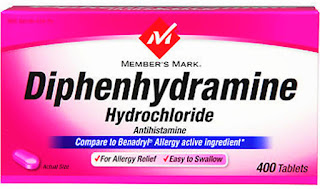
Diphenhydramine Hydrochloride

 DRUG NAME

Generic Name : diphenhydramine hydrochloride

Brand Name:

  • Oral: Allerdryl (CAN), AllerMax Caplets, Banophen, Banophen Allergy, Benadryl Allergy, Diphen AF, Diphenhist, Diphenhist Captabs, Genahist, Siladryl, Silphen Cough
  • Oral prescription preparations: Benadryl, Tusstat
  • Parenteral preparations: Benadryl

ClassificationAntihistamine, Anti-motion sickness drug, Sedative-hypnotic, Antiparkinsonian, Cough suppressant

Pregnancy Category B    Anatomy Quiz

DOSAGE & ROUTE
ADULTS

Oral

  • 25–50 mg q 4–8 hr PO.
  • Motion sickness: Give full dose prophylactically 30 min before exposure to motion, and repeat before meals and at bedtime.
  • Nighttime sleep aid: 25–50 mg PO at bedtime.
  • Cough suppression: 25 mg q 4 hr PO, not to exceed 150 mg in 24 hr.

Parenteral

  • 10–50 mg IV or deep IM or up to 100 mg if required. Maximum daily dose is 400 mg.
PEDIATRIC PATIENTS > 10 KG OR 20 LB       

Oral     Nipah Virus

  • 12.5–25 mg tid–qid PO or 5 mg/kg/day PO or 150 mg/m2 per day PO. Maximum daily dose 300 mg.
  • Motion sickness: Give full dose prophylactically 30 min before exposure to motion and repeat before meals and at bedtime.
  • Cough suppression:
    • 2–6 yr: 6.25 mg q 4 hr, not to exceed 25 mg in 24 hr.
    • 6–12 yr: 12.5 mg q 4 hr PO, not to exceed 75 mg in 24 hr.

Parenteral

  • 5 mg/kg/day or 150 mg/m2 per day IV or by deep IM injection. Maximum daily dose is 300 mg divided into four doses.
GERIATRIC PATIENTS
  • More likely to cause dizziness, sedation, syncope, toxic confusional states, and hypotension in elderly patients; use with caution.
THERAPEUTIC ACTIONS
  • Diphenhydramine blocks histamine H1-receptors on effector cells of the GI tract, blood vessels and respiratory tract. It also causes sedation and has some anticholinergic action.
INDICATIONS
  • Relief of symptoms associated with perennial and seasonal allergic rhinitis; vasomotor rhinitis; allergic conjunctivitis; mild, uncomplicated urticaria and angioedema; amelioration of allergic reactions to blood or plasma; dermatographism; adjunctive therapy in anaphylactic reactions
  • Active and prophylactic treatment of motion sickness
  • Nighttime sleep aid
  • Parkinsonism (including drug-induced parkinsonism and extrapyramidal reactions), in the elderly intolerant of more potent drugs, for milder forms of the disorder in other age groups, and in combination with centrally acting anticholinergic antiparkinsonian drugs
  • Syrup formulation: Suppression of cough due to colds or allergy
ADVERSE EFFECTS
  • CNS depression, dizziness, headache, sedation; paradoxical stimulation in children; dryness of mouth, thickened respiratory secretion, blurring of vision, urinary retention; GI disturbances; blood dyscrasias.
CONTRAINDICATIONS
  • Hypersensitivity ; neonates, lactation.
NURSING CONSIDERATIONS
Assessment
  • History: Allergy to any antihistamines, narrow-angle glaucoma, stenosing peptic ulcer, symptomatic prostatic hypertrophy, asthmatic attack, bladder neck obstruction, pyloroduodenal obstruction, third trimester of pregnancy, lactation
  • Physical: Skin color, lesions, texture; orientation, reflexes, affect; vision examination; P, BP; R, adventitious sounds; bowel sounds; prostate palpation; CBC with differential
Interventions
  • Administer with food if GI upset occurs.
  • Administer syrup form if patient is unable to take tablets.
  • Monitor patient response, and arrange for adjustment of dosage to lowest possible effective dose.
Teaching points
  • Take as prescribed; avoid excessive dosage.
  • Take with food if GI upset occurs.
  • Avoid alcohol; serious sedation could occur.
  • These side effects may occur: Dizziness, sedation, drowsiness (use caution driving or performing tasks requiring alertness); epigastric distress, diarrhea or constipation (take drug with meals); dry mouth (use frequent mouth care, suck sugarless lozenges); thickening of bronchial secretions, dryness of nasal mucosa (use a humidifier).
  • Report difficulty breathing, hallucinations, tremors, loss of coordination, unusual bleeding or bruising, visual disturbances, irregular heartbeat.